Ruxolitinib cream for vitiligo: who it suits, how to use it, and how long it takes
Reviewed by Dr [PLACEHOLDER], dermatologist · Last reviewed [PLACEHOLDER date]
Ruxolitinib cream is the first cream approved in the US specifically for non-segmental vitiligo (as Opzelura, for age 12+). Rutinib is a Bangladeshi generic with the same active ingredient and strength. Here is what to know before you ask your doctor about it.
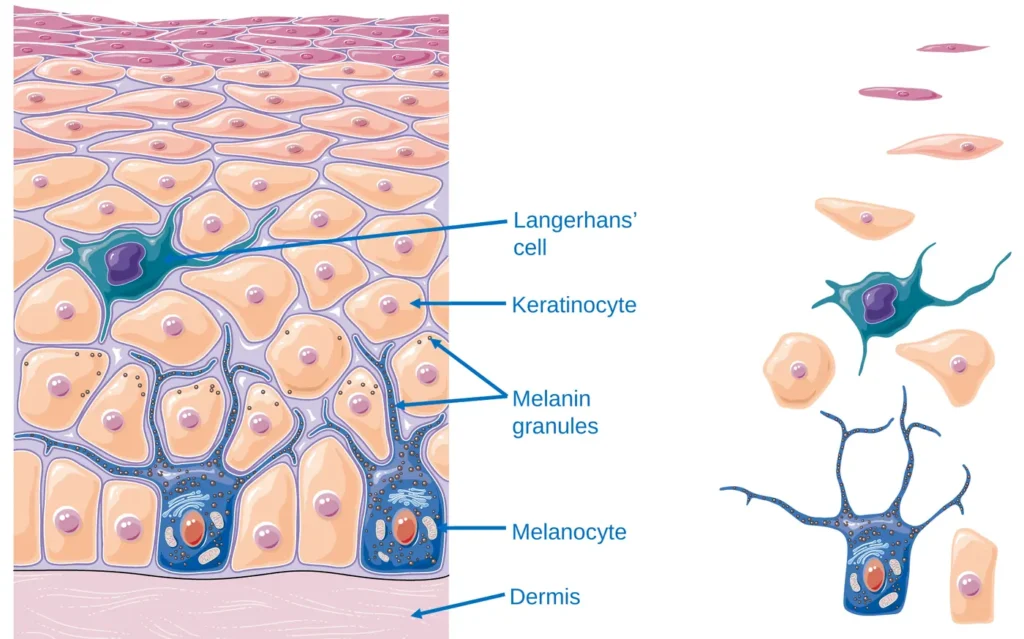
How ruxolitinib cream works in vitiligo
Animation to be produced (60–90 seconds): immune T cells attack pigment cells, the interferon-gamma signal passes through JAK1 and JAK2, ruxolitinib blocks it where the cream is applied, and colour can slowly return. A full transcript will sit under the video. Background: Servier Medical Art, CC BY 4.0
Who it is for
- Non-segmental vitiligo
- Age 12 or older
- Total treated area up to 10% of body surface
- Not using biological medicines, other JAK inhibitors or strong immunosuppressants
How to use it
- Apply a thin layer twice a day to the patches.
- Do not cover with dressings.
- Wash hands after, unless treating the hands.
- Do not use more than one 60 g tube a week (or one 100 g tube every two weeks).
What to expect, month by month
Little visible change is common [PLACEHOLDER: reviewer to confirm].
Label review point; talk to your doctor if no meaningful change.
[PLACEHOLDER: trial data with source]
[PLACEHOLDER]

Face, hands and body

[PLACEHOLDER: reviewer to write evidence-based notes on response by body area, with source].
Side effects and safety
Common side effects reported for the cream include [PLACEHOLDER from label].
BOXED WARNING FOR THE JAK INHIBITOR CLASS
- Serious infections
- Mortality
- Malignancies
- Major adverse cardiovascular events (MACE)
- Thrombosis
Cost of a course
How many tubes you need depends on how much skin you treat.
| Area treated | Tubes per month | Cost per month |
|---|---|---|
| Face only | [PLACEHOLDER] | [PLACEHOLDER] |
| Face and hands | [PLACEHOLDER] | [PLACEHOLDER] |
| Up to 10% of body | [PLACEHOLDER] | [PLACEHOLDER] |
Ready to ask about supply? Tell us your country and we will tell you honestly whether we can supply it, what it costs and what paperwork you need. Check availability and price Ask on WhatsApp
Questions
Can I use it with light therapy?
[PLACEHOLDER: Clinical guidance regarding combination with phototherapy (NB-UVB)].
Will the colour stay if I stop?
[PLACEHOLDER: Clinical observation on repigmentation maintenance and discontinuation trials].
Can I use it on my eyelids or lips?
[PLACEHOLDER: Instructions regarding periorbital and mucosal application limits].
Is it safe for teenagers?
[PLACEHOLDER: Safety and trial indications specific to pediatric patients aged 12 and above].
How long does ruxolitinib cream take to work for vitiligo?
Slowly. The original product’s label says a satisfactory response may need more than 24 weeks of twice-daily use. Colour usually returns first on the face. If there is no meaningful change by then, review treatment with your doctor.
Does ruxolitinib cream work for vitiligo?
In the two phase 3 trials behind the original product’s approval (TRuE-V1 and TRuE-V2), about 3 in 10 people reached at least 75% improvement of facial vitiligo at 24 weeks, compared with about 1 in 10 using a cream without the active ingredient [PLACEHOLDER: reviewer to confirm exact figures from the label]. Many people see some change without reaching that level.
Why are there no before-and-after photos here?
Results vary a great deal between people, and photos chosen by a seller can mislead. Ask your dermatologist about realistic results for your skin, and keep your own photo diary.
Sources
- Opzelura prescribing information, revised 06/2026
- [PLACEHOLDER: dermatology guideline source]
On this page
- Who it is for
- How to use it
- What to expect
- Face, hands and body
- Side effects and safety
- Cost of a course
- Questions
Check availability and price →
10% of body surface is roughly ten of your own palms, including fingers [PLACEHOLDER: reviewer to confirm wording].
- Opzelura prescribing information, revised 06/2026
- [PLACEHOLDER: dermatology guideline source]